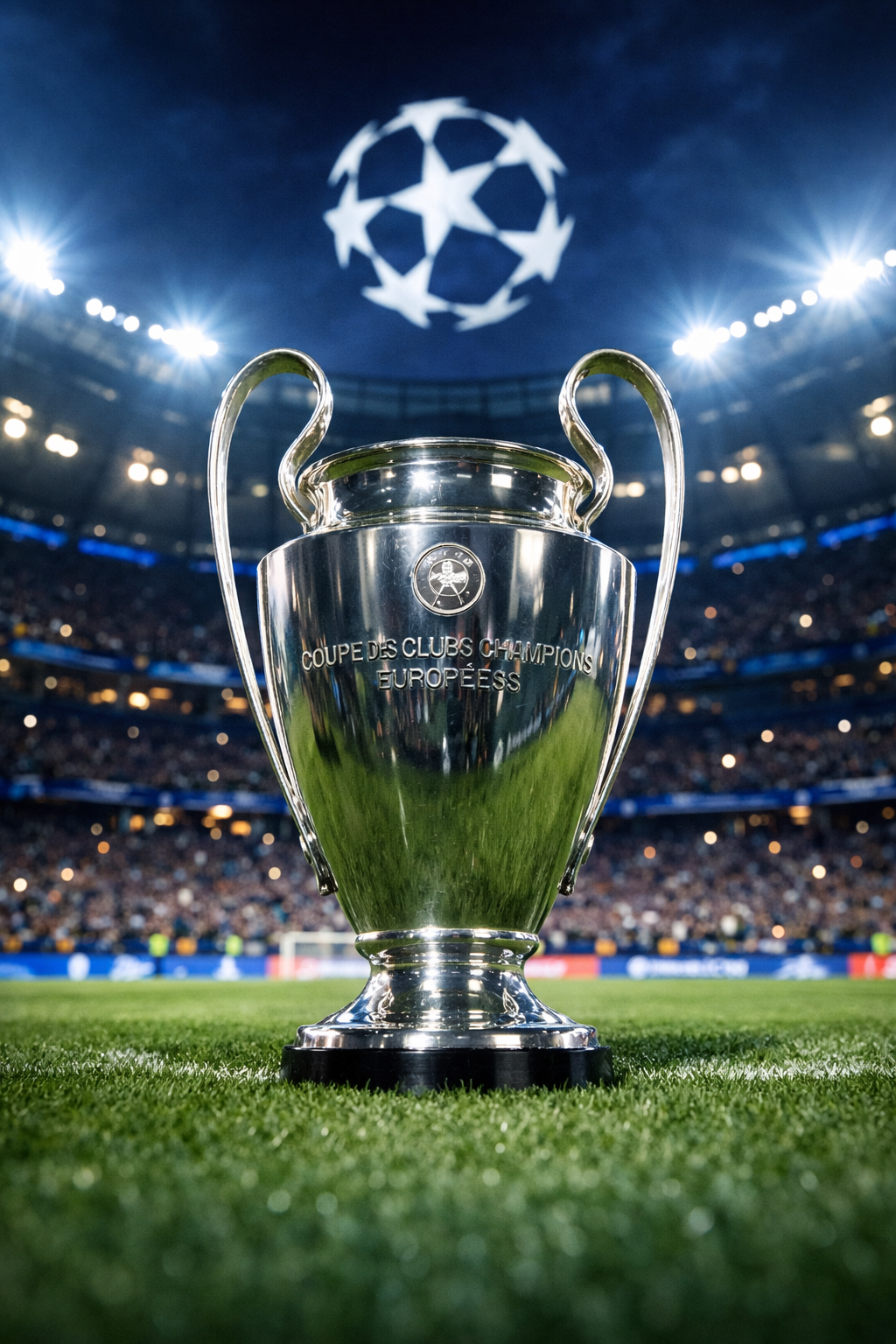
🏆 The Complete History of the UEFA Champions League
The UEFA Champions League history is a story of ambition, innovation, and footballing excellence. Originating in 1955 as the European Cup, it has grown into the most prestigious club competition in the world. From Real Madrid’s early dominance to modern tactical revolutions, the Champions League reflects the evolution of football itself.
📜 Origins of the European Cup
The idea was proposed by French journalist Gabriel Hanot of L’Équipe. He envisioned a continental competition to crown Europe’s best club. UEFA approved the plan in June 1955, and the first season began later that year.
- First match: Sporting CP vs FK Partizan (Sept 1955).
- First champions: Real Madrid, defeating Stade de Reims 4–3 in Paris.
- Format: 16 teams, knockout rounds only.
🏅 Early Years (1955–1991)
The European Cup quickly became a stage for legendary clubs.
- Real Madrid’s dynasty: Five consecutive titles (1956–1960).
- 1960s: Benfica, Inter Milan, and Celtic broke Madrid’s dominance.
- 1970s: Ajax and Bayern Munich introduced tactical revolutions.
- 1980s: Liverpool, AC Milan, and Steaua Bucharest highlighted diversity.
🔄 Transition to Champions League (1992–Present)
UEFA modernized the competition to meet global demand.
- 1991/92: Group stage introduced.
- 1992/93: Rebranded as UEFA Champions League.
- 1997/98: Allowed multiple entrants from top leagues.
- Modern format: Qualifiers, group stage, knockout rounds, single final.
🏟️ Records and Dominance
| Club | Titles | Notable Era |
|---|---|---|
| Real Madrid | 15 | 1950s dynasty, modern dominance |
| AC Milan | 7 | Late 80s–90s golden era |
| Bayern Munich | 6 | 1970s & modern consistency |
| Liverpool | 6 | 1970s–80s dynasty, 2005 miracle |
| Barcelona | 5 | Guardiola’s tiki-taka revolution |
Top Nations: Spain (20 wins), England (15), Italy (12), Germany (8).
🌍 Cultural & Economic Impact
The Champions League is more than football:
- Economic Power: Billions in broadcasting and sponsorship.
- Global Reach: Matches broadcast in 200+ countries.
- Cultural Symbol: The anthem, composed in 1992, is iconic worldwide.
🔍 Analytical Insights
Tactical Evolution
- 1950s–60s: Attacking flair.
- 1970s: Tactical discipline.
- 2000s: Possession football (Barcelona).
- 2010s–2020s: High-intensity pressing (Klopp, Guardiola).
Commercialization
The 1992 rebrand aligned with satellite TV, turning the competition into a global marketing powerhouse.
Competitive Balance
Fairy-tale winners include Porto (2004), Chelsea (2012), and Ajax (1995).
🏆 Memorable Finals
- 1960: Real Madrid 7–3 Eintracht Frankfurt.
- 1999: Manchester United 2–1 Bayern Munich (stoppage-time comeback).
- 2005: Liverpool vs AC Milan (Miracle of Istanbul).
- 2014: Real Madrid vs Atlético Madrid (La Décima).
📈 The Future
- 2024/25: Expanded league phase with 36 teams.
- Globalization: More investors and digital streaming.
- Challenges: Balancing tradition with commercial demands.
📝 Conclusion
The UEFA Champions League history is a journey from Gabriel Hanot’s vision in 1955 to today’s global spectacle. It embodies football’s tactical revolutions, economic growth, and cultural impact. For fans, it remains the ultimate stage for drama, glory, and unforgettable moments.
About The Author


